
✨ This article was AI edited. Editorial responsibility: Hysteroscopy.info.
Produced with AI. This article was artificially generated. Editorial responsibility: Hysteroscopy.info.
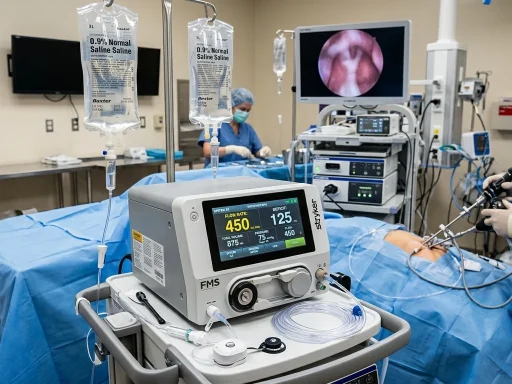
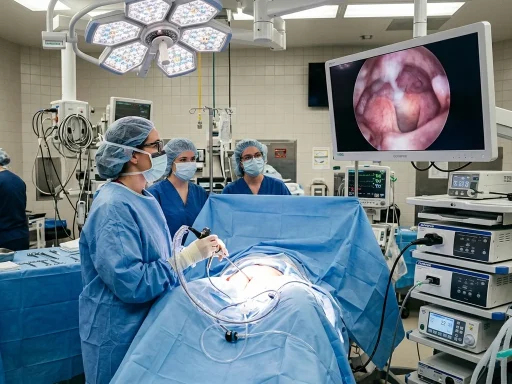
Hysteroscopy is done either as an in-office procedure using miniature “see-and-treat” vaginoscopic scopes with local anesthesia, or in a hospital operating room under IV sedation or general anesthesia. In-office hysteroscopy takes 10 to 15 minutes with immediate discharge, whereas hospital surgical hysteroscopy requires 2 to 4 hours of total facility time for complex fibroid or septum resections.
Deciding between having a hysteroscopy performed in an outpatient clinical office versus a hospital ambulatory surgery center depends on clinical indications, surgical complexity, patient anatomical factors, and personal preference regarding anesthesia. Understanding how the procedural flow differs across both environments allows patients to make informed decisions with their gynecologist.
Head-to-Head Comparison: Office vs. Hospital Hysteroscopy
The key differences between office-based and hospital-based hysteroscopy span anesthesia, equipment size, facility costs, and recovery duration:
| Feature / Factor | In-Office Hysteroscopy (Outpatient Clinic) | Hospital / Ambulatory Surgical Center |
|---|---|---|
| Primary Setting | Physician procedure room / clinic suite | Hospital operating room (OR) / Day surgery unit |
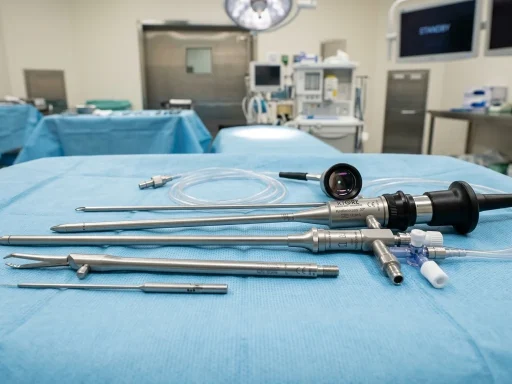
| Hysteroscope Diameter | Miniature rigid or flexible (2.9mm – 4.0mm) | Standard operative resectoscope (5.5mm – 9.0mm) |
| Anesthesia Modality | No anesthesia, topical lidocaine gel, or paracervical block | Intravenous sedation (MAC) or General anesthesia |
| Need for Speculum / Tenaculum | Often eliminated via the “No-Touch” Vaginoscopic technique | Standard speculum and cervical dilation required |
| Average Active Scope Time | 5 – 15 minutes | 20 – 45 minutes |
| Total Facility Time | 45 – 90 minutes | 3 – 5 hours |
| Cost & Copays | Significantly lower (single office visit copay) | Higher (facility fee + anesthesia fee + surgeon fee) |
| Ideal Clinical Indications | Diagnostic check, biopsy, small polyp (<1.5cm) removal | Large submucosal fibroids (>2cm), dense Asherman’s, septum |
The Modern In-Office Vaginoscopic Approach (Bettochi Technique)
The standard of care in modern outpatient hysteroscopy is the vaginoscopic or “no-touch” method developed by Dr. Stefano Bettochi. Instead of using a metallic vaginal speculum and tenaculum to grasp the cervix—the primary sources of discomfort in traditional gynecological exams—the surgeon introduces a continuous-flow miniature 2.9mm scope directly into the vaginal introitus.
Saline distension gently unfolds the vaginal walls, providing direct visual orientation toward the external cervical os. The hysteroscope negotiates the natural cervical canal under direct visualization, dramatically reducing vasovagal reactions, cramping, and patient anxiety.
When Is Hospital Operating Room Hysteroscopy Necessary?
While over 70% of diagnostic evaluations and minor polypectomies can be safely performed in-office, specific clinical scenarios necessitate a hospital surgical suite:
- Large Submucosal Leiomyomas (Type 1 or 2 Fibroids): Resecting large or deeply embedded fibroids requires high-flow resectoscopes (8mm–9mm) and motorized morcellators that require substantial cervical dilation and general anesthesia.
- Severe Intrauterine Adhesions (Asherman’s Syndrome): Complex adhesiolysis often requires concurrent laparoscopic visualization or intraoperative ultrasound guidance to prevent uterine perforation.
- Cervical Stenosis or Extreme Anxiety: Severe cervical scarring or extreme procedural phobia where full sedation ensures complete patient comfort and immobility.
- Distension Fluid Safety Risks: Patients with compromised cardiovascular or renal function requiring intensive hemodynamic monitoring during fluid balance tracking.
Preparation Guidelines by Setting
Preparation requirements differ significantly depending on the planned location:
- In-Office Preparation: Light meal permitted before arrival; take oral ibuprofen (800mg) 1 hour prior to appointment; wear comfortable clothing.
- Hospital OR Preparation: Strict fasting (NPO — nothing by mouth after midnight); arrange an adult escort to drive you home; arrive 1.5 to 2 hours prior to scheduled surgery.
Frequently Asked Questions
Is in-office hysteroscopy painful?
With modern miniature vaginoscopic scopes and pre-procedure ibuprofen, most patients rate discomfort as a 2 to 3 out of 10, describing it as brief menstrual cramping that subsides quickly.
Can I switch from an office procedure to a hospital if I cannot tolerate it?
Yes. If cervical stenosis or discomfort prevents completing an in-office exam, your physician will immediately pause and reschedule the procedure in the operating room with full sedation.
How does insurance coverage compare between office and hospital?
In-office hysteroscopy is billed as a clinical procedure, generally avoiding costly hospital facility charges and separate anesthesiology invoices, resulting in substantially lower out-of-pocket patient costs.
For more detailed information on procedural costs, view our CPT Coding and Insurance Guide and explore our Hysteroscopy vs. Laparoscopy Comparison.
Patient Comfort Innovations: The Evolution of Office Hysteroscopy
Over the past two decades, significant technological advancements have transformed office hysteroscopy from an uncomfortable hospital-bound surgery into a streamlined, high-comfort clinical procedure:
- Miniaturized Optical Physics: The transition from 5mm scopes to ultra-compact 2.9mm continuous-flow rod-lens telescopes allows smooth passage through narrow cervical canals without mechanical force.
- Vaginoscopic Hydro-Dilation: Utilizing warm isotonic saline to distend the vaginal vault eliminates metallic speculums and tenacula, reducing patient discomfort scores by over 60%.
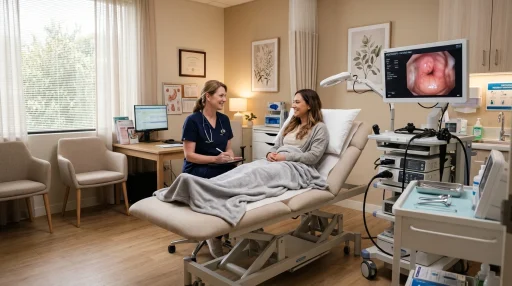
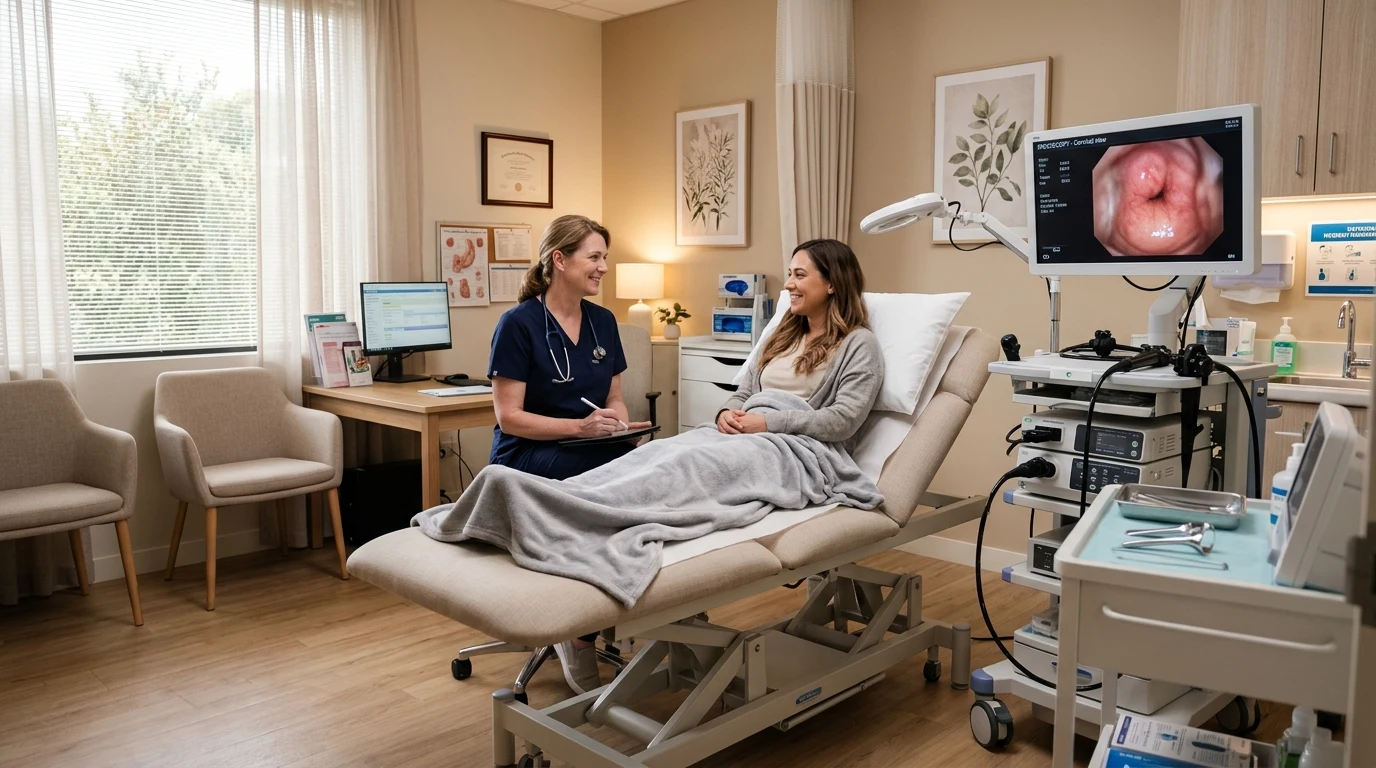
- Anxiety-Reducing Clinical Environments: Procedure rooms equipped with ambient lighting, soothing audio, and dedicated patient-facing display screens empower patients to view the live procedure alongside their physician if desired.
Decision Tree: Choosing Between Office and Hospital Settings
Gynecologists and patients navigate the setting decision based on a multi-factorial clinical assessment:
| Clinical Scenario | Recommended Setting | Primary Medical Rationale |
|---|---|---|
| Suspected Endometrial Polyp (<2cm) | In-Office Outpatient | Rapid mechanical morcellation; zero recovery downtime |
| Postmenopausal Bleeding Evaluation | In-Office Outpatient | Direct visual biopsy with minimal cervical trauma |
| Large Multiple Submucosal Fibroids (>3cm) | Hospital Operating Room | Requires continuous fluid balance monitoring and deeper anesthesia |
| Severe Asherman’s Syndrome (Dense Synechiae) | Hospital Operating Room | May necessitate concurrent laparoscopic or ultrasound guidance |
| Severe Medical Comorbidities (Cardiac / Renal) | Hospital Operating Room | Advanced intraoperative hemodynamic monitoring by anesthesiology team |
Get our latest guides, news, and insights highlighted in your Google Search & AI Overviews.