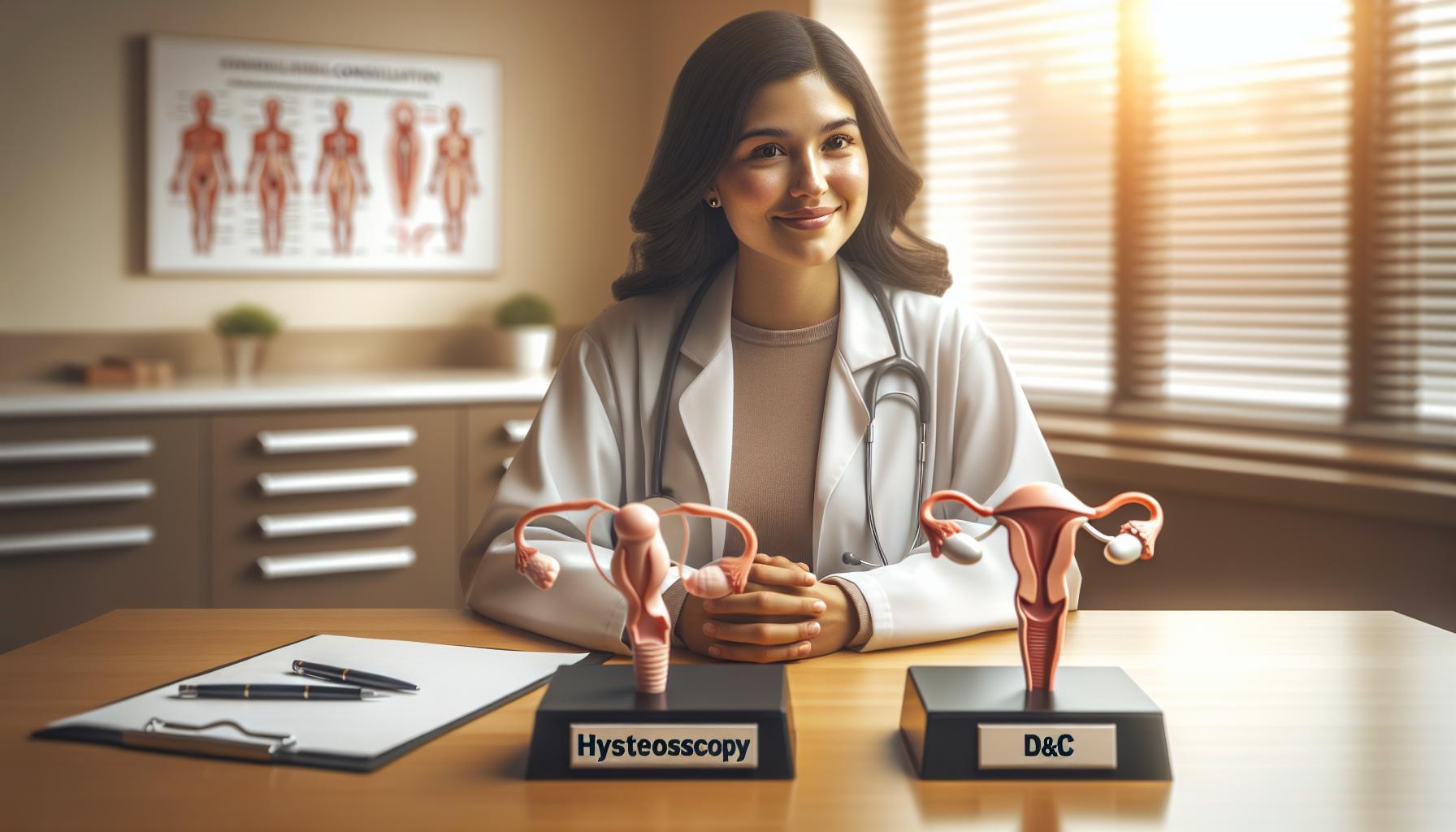
Hysteroscopy vs. Other Procedures
Comparative gynecological procedural evaluation analyzes the diagnostic sensitivity, specificity, and therapeutic utility of direct visual hysteroscopy against blind sampling modalities (such as Dilation & Curettage), radiographic imaging (Hysterosalpingography), pelvic sonography, and abdominal laparoscopy to determine the optimal clinical pathway.
Foundational Comparative Guides
D&C Vs Hysteroscopy: Choosing the Right Procedure For Your Needs
Why blind curettage misses over 60% of focal intrauterine lesions and how direct optical visualization transforms diagnostic accuracy.
Hysteroscopy vs HSG: Choosing the Right Test for Fertility Concerns
How fluoroscopic tubal patency evaluation compares to direct visual cavity inspection during subfertility diagnostic workups.
Endometrial Biopsy vs Hysteroscopy: Which Delivers Better Results?
Comparing blind office Pipelle aspirates with hysteroscopically directed biopsies in evaluating abnormal uterine bleeding and hyperplasia.
Can Laparoscopy Replace Hysteroscopy? Procedure Comparisons
Clarifying anatomical boundaries: why transperitoneal laparoscopy and intrauterine hysteroscopy are complementary, non-interchangeable procedures.
Diagnostic Accuracy: Direct Optical Visualization vs. Blind & Indirect Modalities
For over a century, blind Dilation and Curettage (D&C) served as the default gynecological intervention for abnormal uterine bleeding. However, landmark clinical studies demonstrate that blind D&C samples less than 50% of the endometrial surface area and misses focal pathologies—such as endometrial polyps and submucosal fibroids—in more than 60% of cases. By introducing a continuous-flow telescope, hysteroscopy converts a blind scraping procedure into a precise, targeted visual microsurgery.
Similarly, while transvaginal ultrasonography (TVUS) and saline infusion sonohysterography (SIS) serve as excellent non-invasive screening tools, they remain indirect acoustic representations subject to shadow artifacts and patient habitus limitations. Hysteroscopy provides direct visual chromo-endoscopy, allowing surgeons to inspect subtle micro-vascular patterns, guide biopsies to the exact epicenter of abnormal tissue, and resect structural lesions in the same operative setting.
Comparative Clinical Directory
Alternative Endoscopic & Biopsy Modalities
Surgical Alternatives & Organ Preservation
Fertility & Tubal Imaging Comparisons
Frequently Asked Comparison Questions
Why has hysteroscopy largely replaced D&C for abnormal bleeding?
D&C is a blind procedure that frequently slides over pedunculated polyps and submucosal fibroids without removing them. Hysteroscopy allows direct visualization of the entire endometrial lining, enabling precise targeted biopsy and immediate complete excision under optical control.
What is the difference between a hysteroscopy and a colposcopy?
A colposcopy evaluates the external cervix and transformation zone using a specialized magnifying binocular microscope outside the body, typically to evaluate abnormal Pap smears. A hysteroscopy passes a telescope through the cervix to evaluate the internal uterine cavity.
Can laparoscopy see inside the uterine cavity?
No. Laparoscopy looks at the outside of the uterus, fallopian tubes, and pelvic peritoneal cavity through small abdominal incisions. It cannot evaluate the internal endometrial lining; only hysteroscopy provides direct visualization of the intrauterine cavity.
Can hysteroscopy serve as a uterus-preserving alternative to hysterectomy?
Yes. For benign pathologies such as heavy menstrual bleeding, endometrial polyps, or submucosal fibroids, operative hysteroscopy (such as hysteroscopic myomectomy or endometrial ablation) successfully treats symptoms while preserving the uterus and avoiding major abdominal surgery.